
BY: Beanie Geoghegan
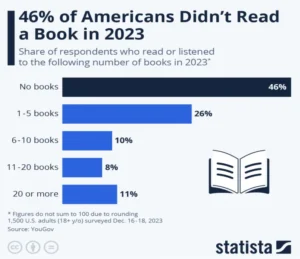
According to recent data, less than half of adults read a book in 2023. The percentage of adults who read daily for fun in the same year was a measly 13%. Data from the same survey shows the percentage of 13-year-olds who read for fun dropped from 28% in 2004 to 14%. It’s clear that “reading books for fun” has fallen out of fashion. That is disheartening, but what’s also sad is that reading whole books in school has also fallen out of fashion in recent years. Freedom in Education believes it needs to be fashionable again, and we have a plan to make it happen. Let’s call it the “Beginning Reader to Bookworm” plan.
In 1996, a bad breakup led a man named Josh Clark to scribble down a 9-week training plan and start an international movement that continues today. That plan was the foundation of Clark’s “Couch to 5k” exercise program, which helped would-be runners get off the couch and build the strength, self-discipline, and stamina needed to run (or jog) a 5k.
Through small, incremental steps and exercises, participants in the program learned they were capable of more than they ever thought. Millions of people around the world joined a community with a shared passion and goal and can call themselves “runners” thanks to Josh Clark’s practical, user-friendly approach.
Much like Clark’s program, which built strength and confidence incrementally to help individuals run longer distances more easily and with less pain, schools can build stamina and confidence incrementally to help students read longer, more complex texts with less cognitive strain. That starts with ensuring the foundations of literacy (phonemic awareness, phonics, fluency, vocabulary, and background knowledge) are explicitly taught, but it also requires students to read books.
Just as many of the runners who have participated in the “Couch to 5k” program find they are now part of a community that shares certain experiences, students who read books together—and schools that maintain a consistent reading list year after year—also share common experiences. In the past decade, schools have placed a lot of emphasis on “belonging,” but have often missed one of the most organic ways to cultivate it. Reading and discussing great books together creates connections like few other experiences.
In 2020, there was a dramatic increase in the number of people who began running. Many turned to the activity because of the Covid lockdowns that negatively impacted their physical and mental health. It took a crisis like a pandemic to get people interested and motivated to lace up their shoes and get moving. Apparently, it will take a crisis on the same scale to convince people to open books and read. If you were wondering, the crisis is upon us, and we are at a critical juncture for literacy in America.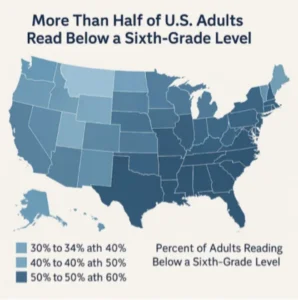
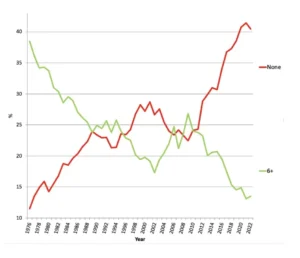
In a recent blog, Jean Twenge, a Professor of Psychology at San Diego State University, and the author of more than 190 scientific publications and books, noted that, “Since 1976, the Monitoring the Future Survey has asked a large, nationally representative sample of American high school seniors how many books they read in the last year, ‘just because you wanted to – that is, without their being assigned.’ Thus, it’s asking about reading for pleasure outside of anything for school.”
“In 1976, nearly 40% of U.S. 12th graders read 6 or more books for pleasure in the last year. By 2021-22, it was down to 13%…So in a high school classroom of 30 teens, in 1976, only about 3 would not have read a single book for pleasure. In recent years, it’s 12, four times as many.”
As a wise person once said, “The man who does not read has no advantage over the man who cannot read.” Does it matter if Americans read on a 6th-grade level if they haven’t cultivated the habit of reading on a regular basis?
Research shows that reading books isn’t just a good way to pass the time; it also has a significant impact on your brain. Reading (especially books) changes the physical makeup of the brain. It activates parts of the brain that allow you to experience things more deeply. That means that when you put the riveting and engaging book down, you just might find everyday life a bit more engaging.
Reading has also been shown to reduce stress, increase attention spans, improve memory, and enhance creativity and imagination. Of course, reading books also increases knowledge about people and the world, which leads to better understanding and communication with others.
So, we know why reading whole books is important, and we know that the habit of doing so is declining. What’s the plan to reverse this trend? While nothing can be done on a policy or legislative level to motivate or encourage individuals to read for enjoyment, it is not out of line to require publicly funded schools to cultivate better reading habits among their students through the practice of reading whole books. Stanley Kurtz and Mark Bauerlein have drafted a model bill that would do just that. Their BOOKS (Books Optimize Our Kids’ Schools) Act would require students in sixth through 12th grades to read at least two books in their entirety per semester in their English classes.
Aside from legislation, there are practical steps schools and teachers can take to build the kind of reading stamina in their students that will enable them to enjoy reading for pleasure, but also read to be challenged and changed. Like the “Couch to 5K” program, the process doesn’t have to be painful or grueling.
The philosophy of whole language advocates held that all students needed to develop a love of reading and build stamina through exposure to many books. We now have decades of data showing that exposure alone is insufficient. We know that explicit instruction in foundational literacy skills such as phonics, phonemic awareness, fluency, and vocabulary is critical. However, just as runners don’t increase speed, endurance, or stamina without actually running regularly, students won’t gain reading stamina without actually reading books.
So, the solution is to explicitly and effectively teach the foundations, while ensuring students have opportunities to read or listen to books multiple times each day. Fiction and nonfiction books can and should be incorporated into every subject area. Read biographies of mathematicians and engineers in math class. Assign books about scientists or inventions during science class. Bring history to life through books that span the globe and centuries. Read and discuss poetry in music class. And in P.E., share stories of perseverance from athletes who overcame adversity.
Of course, books should be an integral part of Language Arts class (if your ELA curriculum doesn’t include books, find a new curriculum), but they shouldn’t be relegated to that block alone. Create the habit of reading in students, regardless of subject or interest. If you need ideas or suggestions, you can check out the Recommended Reading List that Freedom In Education offers.
Teachers and staff can also set an example by creating monthly book clubs where they read books unrelated to teaching. Demonstrating the importance of reading, discussing, and learning from books—not just for Professional Development, but for the development of their own minds—sends a message to students watching.
It’s the sad truth that young people are not reading books for pleasure these days. They are missing out on much. But schools don’t have to surrender to this trend. They can actively work to reverse it. With the right “training program,” maybe they can turn the next generation of “Beginning Readers” into full-fledged Bookworms.