BY: Beanie Geoghegan
I recently had the immense pleasure of being a guest at the Teach Like a Champion Science of Reading workshop in Memphis, Tennessee. While I was familiar with the work of Teach Like a Champion (TLAC) and the tenets of the Science of Reading (SoR), I had not yet had an opportunity to dig into the recent publication, “The Teach Like a Champion Guide to The Science of Reading”. I was eager to spend two days learning how TLAC approached the SoR principles. My only disappointment was not getting this type of training prior to becoming a classroom teacher.
Now, I can already hear the audible groans from some readers about the uselessness of professional development. I empathize with and understand the frustration some feel about the tendency of schools and districts to constantly gravitate toward “the next great thing in education.” I’ve sat through pointless professional development sessions and listened to educational consultants promise “unprecedented student engagement” with their “innovative” approach to teaching. This workshop was far from pointless, focused on student learning rather than just “engagement,” and delightfully made no claims about innovation. It was refreshing.
The purpose of this workshop was to bridge the research on how students learn with its practical classroom application. Considering our current literacy crisis (According to the recent 2024 NAEP results, only 30 percent of eighth graders in the United States read at or above the proficient level), there is a great urgency to disseminate this information widely. The goal was to train teachers and instructional coaches to put the research into practice or share it with their staff upon returning to their classrooms and schools on Monday morning. Professional Development like this is becoming more common, and I plan to write a blog soon highlighting some of the options. For now, I will focus on one of the best.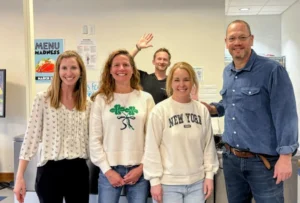
Doug Lemov kicked off the first morning of the workshop, reminding the eighty-plus educators from over ten different states in attendance that learning starts with attention. The purpose was twofold. First, he was prompting us to put away anything (specifically our phones) that might distract our attention and hinder our learning from him and his colleague, Colleen Driggs, throughout the workshop. Second, he was laying the groundwork for everything we would learn over the next 48 hours. “Everything starts with attention.”
Lemov and Driggs wasted no time demonstrating the power of attention in the classroom. A brief video clip of TLAC fellow, Christine Torres, beautifully illustrated the importance of practiced routines, clear expectations, limited distractions, and the understanding that attention to the book, lesson, or discussion is not optional. Despite the absence of “innovative technology,” “fun activities,” or “collaborative group projects,” her class of fifth-grade students was fully engaged in the lesson and eager to participate in the discussion. In fact, one could argue that it was because of the absence of those elements that every student in the class was attentive and engaged in the learning process.
Once we were all on board with the understanding that attention was key, Lemov and Driggs shifted the focus to fluency, which they define as “accuracy, automaticity, and prosody.” It is also one of the greatest predictors of academic success across all literacy-based subject areas. This is likely why the largest portion of the day was devoted to teaching us how to help students develop and hone their fluency.
After a brief explanation of FASE (Fluent, Attentive, Social, Expressive) Reading, we were shown several video clips of classroom teachers demonstrating its use in their classrooms. I will admit that the idea of ensuring every student, even the hesitant ones, had opportunities to read aloud concerned me. My concerns were abated after Lemov and Driggs explained the importance of reading aloud, especially for hesitant or struggling readers, and demonstrated techniques that led to universal success during FASE reading.
One of the highlights of the two-day workshop happened during this time. To demonstrate that these practices are not only effective in a whole-group setting but also transferable to small reading groups, we were shown a clip of FASE Reading in a small second-grade reading group. The first student who read in the video clip did so with such prosody, and nearly every educator in the room audibly celebrated. I admit that I got a little misty-eyed in the moment. It’s one thing to hear about how effective this method of reading instruction is, but it’s quite another to witness the results demonstrated so clearly in students so young.
While fluency is essential, it is not enough to ensure literacy. Without background knowledge, students’ comprehension remains limited, even if they read fluently. The workshop focused on building that knowledge through nonfiction texts, explicit instruction, vocabulary development, and frequent retrieval practice. When students build knowledge, they understand more, enjoy reading more, and are better able to tackle complex texts.
 By the end of day one, my head was buzzing with all that I had learned. The amount of knowledge about literacy instruction I gained in those eight hours was vast. Little did I know that the next day’s agenda would be equally packed and just as valuable.
Day two of the workshop focused on retrieval practices to help students move new knowledge into their long-term memory. Using formats like Turn and Talk, Cold Call, and Everybody Writes gives students frequent, low-stakes opportunities to recall what they’ve learned, making it much more likely to stick. We also spent time on explicit vocabulary instruction and the use of Knowledge Organizers, both of which help build fluency and background knowledge over time. We rounded out the workshop with writing instruction, with a clear emphasis on using writing as an extension of reading. When students write about what they’ve read, they’re not just practicing a skill—they’re processing, organizing, and deepening their understanding in a meaningful way.
Some key takeaways from this part of the workshop were the need to vary the types of writing tasks, ensure students are correctly incorporating key vocabulary terms in their written responses, invite students to reflect on what they read as they formulate their responses, and encourage them to become more concise in their writing as they learn to better organize their thoughts.
Speaking of being concise, I could go on and share more details about everything I took away from this two-day workshop, but Doug Lemov, Colleen Driggs, and Erica Woolway literally wrote a whole book about it, so I can wrap up my reflection here. For educators looking to refine their craft, I highly recommend attending one of these workshops. This isn’t “the shiny new thing”; it’s the thing that has always worked, but many of us were never trained how to do it in our education courses. Until things change on that end of things, we must take advantage of opportunities like this.