By: Natasha Jasperson
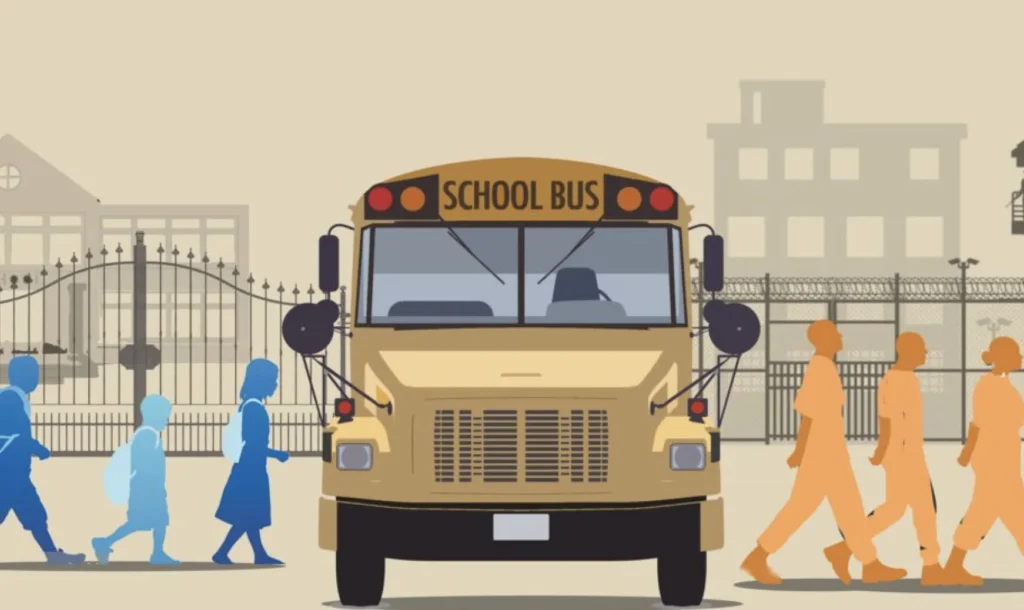
There is a widely circulated claim that officials can estimate the number of future prison beds by looking at third-grade reading scores. Whether taken literally or not, the idea reflects a deeper and more troubling reality about the connection between early literacy and long-term life outcomes.
Research from the National Research Council, drawing on the National Adult Literacy Survey, estimated that approximately 70 percent of incarcerated adults read below a fourth-grade level. The figure comes from older data and should not be treated as a current measurement of the incarcerated population. It does, however, illustrate a longstanding overlap between low literacy and incarceration.
That relationship does not mean that poor reading causes criminal behavior. A student’s future is shaped by many factors, both inside and outside the classroom. But it does raise an important educational question: What happens when a child reaches the later grades without the ability to read proficiently?
The answer begins with something deceptively simple.
Reading is how students access much of what they are expected to learn.
The Third-Grade Turning Point
Reading proficiency by the end of third grade is widely recognized as an important milestone in a child’s educational development. Up to this point, students are primarily learning how to read. After third grade, they increasingly rely on reading to learn.
The distinction matters.
A student who has not developed strong reading skills is asked to learn increasingly complex material while simultaneously struggling with the basic skill required to access it. History, science, mathematics, literature—all require students to read, comprehend, interpret, and make meaning from written information.
Research from the Annie E. Casey Foundation found that students who were not proficient readers by the end of third grade were four times more likely than proficient readers to leave high school without graduating on time. The study followed nearly 4,000 students nationally.
The point is not that third grade is a magical cutoff. It isn’t. Children continue learning to read after third grade, and strong readers continue developing their skills throughout their education.
The issue is that the academic demands change.
Students encounter longer and more complex texts. They are expected to learn from textbooks, primary sources, scientific explanations, literature, and increasingly sophisticated written material. A student who has not developed strong foundational reading skills is now being asked to learn through a skill that remains unfinished.
And nationally, reading performance remains a serious concern.
In 2024, just 31 percent of fourth-grade students performed at or above the NAEP Proficient level in reading. The fourth-grade figure was two percentage points lower than in 2022.
These numbers are not simply about testing.
They represent students entering increasingly demanding academic environments with varying degrees of ability to access what they are being taught.
When Reading Failure Becomes Academic Failure
Literacy is more than the ability to read and write. It serves as a foundational skill that influences a person’s ability to learn, communicate, and navigate the world.
A student who struggles with reading is not simply struggling in English class.
That student may also struggle to understand a history textbook, interpret a scientific explanation, solve a word problem, follow written directions, or engage independently with increasingly complex material.
The difficulty can compound.
A student who cannot decode a word accurately has difficulty understanding a sentence. A student who struggles to understand sentences has difficulty comprehending a paragraph. A student who cannot comprehend a passage has difficulty learning from the material contained in it.
Over time, academic frustration can become disengagement.
The U.S. Department of Justice has identified a relationship between academic failure and delinquency, violence, and crime, and earlier justice research specifically examined reading failure as a predictor of delinquency.
That relationship should be understood carefully. Literacy does not determine whether an individual will become involved in the justice system. But persistent academic failure can become part of a larger trajectory, and reading failure is an important component of academic failure.
That is what makes the instructional question so important.
This Is Where Pedagogy Matters
Students need to be taught how to read.
That may sound obvious, but the details matter.
The National Reading Panel reviewed decades of research on reading instruction and identified five essential areas: phonemic awareness, phonics, fluency, vocabulary, and comprehension. The panel found that systematic phonics instruction was significantly more effective than instruction that provided little or no phonics instruction. At the same time, the panel emphasized that phonics is one component of a complete reading program and must be integrated with other reading instruction.
In other words, effective reading instruction is not a single method.
It is a progression.
Students first need to develop an awareness of the sounds within spoken language. They need to understand the relationship between sounds and letters. They need to learn how to decode words, build fluency, develop vocabulary, and comprehend what they read.
The Institute of Education Sciences similarly recommends explicit instruction in foundational reading skills, including academic language and vocabulary, phonological awareness, decoding and word analysis, and daily opportunities to read connected text.
The emphasis on explicit instruction is significant.
Students who are struggling readers do not necessarily need more opportunities to guess at words or spend more time with books they cannot independently access. They need instruction that makes the underlying skills clear, gives them opportunities to practice those skills, and provides feedback when they have difficulty.
Research supports that approach.
The National Reading Panel found that systematic phonics instruction improves children’s ability to decode and spell words and can improve reading comprehension in beginning readers. It also emphasized the importance of fluency, vocabulary, and comprehension instruction as part of a complete reading program.
The goal is not simply to produce students who can sound out words.
It is to produce readers who can use written language to acquire knowledge.
From Reading Skills to Knowledge
Learning to decode words is essential, but it is not the end of reading instruction.
A student can accurately pronounce the words on a page without fully understanding what those words mean. Comprehension depends in part on vocabulary and background knowledge, as well as the ability to make meaning from the text.
The National Reading Panel described comprehension as essential not only to academic learning across subject areas but to lifelong learning as well. Its review found that vocabulary instruction can contribute to gains in comprehension and that students benefit from both direct instruction and exposure to words in meaningful contexts.
This is where literacy and curriculum meet.
A student cannot gain the full benefit of a history curriculum if reading remains a barrier. A scientific concept becomes harder to understand when the student cannot independently comprehend the explanation. Literature cannot open the world of human experience to a reader who is still struggling to understand the page.
Reading instruction, therefore, cannot be separated entirely from what students are asked to read.
Students need the skills to read, but they also need meaningful opportunities to use those skills to acquire knowledge.
The ability to read gives students access to the accumulated knowledge of generations. It allows them to encounter ideas independently, examine arguments, understand events, and engage with subjects beyond what a teacher can explain in a single classroom.
That is part of what makes literacy foundational.
The Cost of Waiting
When a student begins to demonstrate difficulty with reading, the timing of intervention matters.
Waiting several years to see whether the problem resolves itself can allow a relatively narrow academic gap to become much larger. By the time a student reaches the later grades, the problem may no longer appear to be confined to reading. The student may be struggling in multiple subjects simply because reading is the means through which much of the material is presented.
Early identification gives educators an opportunity to determine what the student actually needs.
Is the difficulty phonological awareness? Decoding? Fluency? Vocabulary? Comprehension?
Those distinctions matter because intervention is most useful when instruction addresses the underlying difficulty.
The What Works Clearinghouse recommends universal screening, regular progress monitoring, and intensive, systematic instruction for students identified as struggling readers. It specifically recommends instruction addressing phonemic awareness, phonics, vocabulary, comprehension, and fluency according to students’ needs and developmental levels.
The earlier those needs are identified, the more instructional time there is to address them.
Teachers Need the Tools to Teach
Teachers are often the first to recognize when students are struggling academically, making teacher knowledge and professional development essential.
Educators need to understand how reading develops and how to identify the source of a student’s difficulty. They need access to instructional materials and curriculum that allow them to teach foundational skills systematically and build toward increasingly complex reading and comprehension.
That does not reduce teaching to a script.
There is still an art to teaching.
But the art of teaching should be supported by a clear understanding of how students learn to read.
The National Reading Panel specifically noted the importance of teacher preparation in implementing effective reading instruction.
Effective pedagogy requires both knowledge and judgment: knowledge of what students need to learn, and judgment about how to help individual students master it.
When students struggle, simply giving them more of the same experience is not necessarily enough. The instruction has to respond to the problem.
Where the Pipeline Enters the Picture
The school-to-prison pipeline is a complicated issue. Literacy is not its sole cause, and no serious examination of justice-system involvement can reduce it to a single academic variable.
Students’ trajectories are influenced by many circumstances, including family life, disability, behavior, community conditions, economic circumstances, and experiences outside of school.
But that complexity should not obscure the role of education.
Academic failure and justice-system involvement have been connected in research for decades. The Department of Justice has described academic failure as closely associated with delinquency, violence, and crime, while justice research has specifically examined the relationship between reading failure and delinquency.
The relationship is best understood as a chain rather than a single cause.
A student struggles to read.
That student has difficulty accessing the curriculum.
Academic performance suffers.
Repeated academic difficulty can contribute to frustration and disengagement.
Disengagement can contribute to dropping out.
And dropping out is associated with greater contact with the justice system.
Not every student follows that path. Most struggling readers do not.
But the existence of other contributing factors does not make literacy irrelevant. It makes early academic intervention one part of a much larger picture.
The Stakes Extend Beyond the Classroom
The evidence does not suggest that a reading score can predict an individual child’s future with certainty. It does suggest that early literacy is closely connected to educational outcomes and that reading difficulties can persist when they are not effectively addressed.
The Annie E. Casey Foundation’s longitudinal research found a significant relationship between third-grade reading proficiency and high school completion. Current national assessment data show that a majority of fourth- and eighth-graders are not performing at the NAEP Proficient level in reading. And decades of reading research continue to support systematic instruction in foundational skills, fluency, vocabulary, and comprehension.
Taken together, the findings point to a problem that begins in the classroom but does not necessarily stay there.
The consequences of reading difficulty become more pronounced as students encounter more demanding academic material. What begins as difficulty with a foundational skill can eventually affect a student’s ability to participate fully in the curriculum.
That makes the question of how schools teach reading more consequential than a reading score alone might suggest.
For a student sitting in a classroom, the issue is immediate: Can the student read the words on the page? Can the student understand what they mean? Can the student use that understanding to learn something new?
Those questions are foundational to nearly everything that follows in a child’s education.
And the answer can shape far more than what happens on the next reading assessment.