By: Amos Tarfa
Have you ever stopped to consider the people behind the ideas we teach in mathematics and science?
Why do we refer to Newton’s laws of motion or Euler’s identity? Who were Isaac Newton and Leonhard Euler? What questions were they trying to answer? What inspired their work, and how did their discoveries shape the world we know today?
The history of mathematics, science, and technology is filled with remarkable stories. Yet we often teach the concepts without exploring the people and circumstances that gave rise to them. In doing so, we miss an important opportunity to help students understand not only what they are learning, but why it matters.
Recently, while visiting Mainz, Germany, I had the opportunity to reflect on one such story: the development of the printing press.
Although printing technologies existed in Asia long before Johannes Gutenberg, his contribution was to bring together and refine existing innovations into a movable-type printing system that transformed the production and distribution of written materials. The location of his work was significant, too. Mainz’s position along the Rhine River offered important advantages for trade and the movement of goods.
It is a reminder that technological advancements rarely emerge in isolation. They are shaped by the people, ideas, resources, and circumstances surrounding them. We use technologies every day without necessarily asking where they came from, who developed them, or what made their development possible.
We should bring that same curiosity into our mathematics and science classrooms.
The People and Ideas Behind the Concepts
When we teach mathematics and science, we should ask students to consider questions such as: Who was Archimedes? Who was Euler? Who was Newton? Who was Gauss? What problems were these individuals trying to solve, and what can we learn from the paths they took?
Understanding the historical context behind a concept gives students a framework for appreciating its significance. When students are introduced to a new topic, one of their natural questions is, “Why should I care?” Simply presenting a formula, theorem, or scientific principle does not always answer that question.
But when students learn about the people who developed these ideas, the challenges they encountered, and the questions that drove their investigations, the subject becomes more meaningful. They begin to see mathematics and science not as collections of disconnected facts, but as ongoing human endeavors.
This is especially important today, as students grow up surrounded by rapidly advancing technology. We need to help them understand not only the knowledge that has brought us to this point, but also the intellectual work that made these advancements possible.
During another recent visit, this time to London’s Royal Institution, I was reminded of the contributions of Michael Faraday and James Clerk Maxwell. Both made extraordinary contributions to our understanding of electricity, magnetism, and physics.
Consider Faraday’s experiments with magnets and electricity in 1831, including the work he continued even on Christmas Day. Understanding what motivated him to pursue these investigations helps us appreciate the physics concepts that emerged from his work. Even when those concepts are difficult to understand, knowing the questions that inspired them gives us a reason to engage with the material more deeply.
We need to rethink how we introduce concepts to students. We should tell them about the people behind the discoveries, the individuals who influenced them, and the generations of thinkers whose work made their contributions possible.
Just as importantly, students should understand that they, too, can contribute to this tradition. They are not simply consumers of knowledge. They can become creators, problem-solvers, and innovators who build upon the work of those who came before them.
One Generation Builds on Another
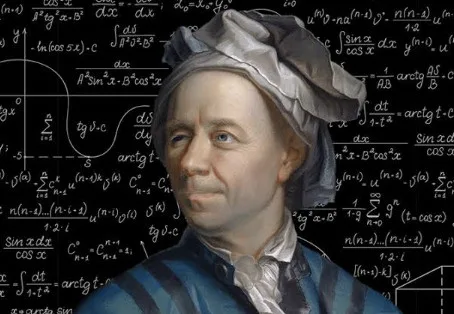
Consider Leonhard Euler, one of the most influential mathematicians in history.
Born in Basel, Switzerland, in 1707, Euler initially faced a different path. His father wanted him to become a pastor, but Euler demonstrated an extraordinary aptitude for mathematics. His tutor, Johann Bernoulli, recognized his talent and encouraged his father to support his mathematical studies.
That encouragement helped set the course for one of the most remarkable careers in mathematical history.
Euler made significant contributions across mathematics and physics, influencing generations of mathematicians who followed him, including Carl Friedrich Gauss. His work illustrates how one individual’s discoveries can open the door for another to advance an entire field.
Euler is perhaps best known to many students for Euler’s identity, often regarded as one of the most beautiful equations in mathematics:
[e^{i\pi}+1=0]
In a remarkably concise expression, the identity brings together several fundamental mathematical constants: Euler’s number, the imaginary unit, pi, one, and zero.
His accomplishments are even more remarkable when we consider the challenges he faced later in life. Euler gradually lost his sight and eventually became completely blind. Yet he continued his mathematical work, relying on others to read papers to him while he dictated his ideas. Even during this period, he maintained an extraordinary rate of scholarly productivity, publishing dozens of papers in a single year.
His life is a powerful example of intellectual perseverance and the enduring value of curiosity.
Euler’s story also reminds us that mathematical achievement is rarely the work of one individual alone. His own development was influenced by Johann Bernoulli, and his contributions would go on to influence mathematicians such as Gauss.
The same pattern can be seen throughout the history of mathematics and science.
Standing on the Shoulders of Giants
Isaac Newton, born in 1643, was already an established figure in the scientific world when Euler was born. Newton studied at Cambridge University, where his early academic work included a broad range of subjects. It was during this period and the years that followed that he developed many of the ideas that would transform our understanding of mathematics and classical physics.
But Newton’s work did not emerge in isolation.
He was influenced by earlier thinkers, including Galileo Galilei, who was born in 1564 and made groundbreaking contributions to astronomy, mechanics, and the scientific study of the natural world. Galileo’s improvements to the telescope around 1609 helped advance astronomical observation and challenge established understandings of the universe.
Galileo himself was influenced by the work of Nicolaus Copernicus and others who sought to better understand the movements of celestial bodies.
When Newton famously wrote, “If I have seen further, it is by standing on the shoulders of giants,” he acknowledged the contributions of those who had come before him. Among these intellectual predecessors were Galileo, Johannes Kepler, and Copernicus.
Newton’s mathematical and scientific world was also shaped by the work of Blaise Pascal, René Descartes, and Pierre de Fermat, among others.
These connections matter. They show students that the development of knowledge is cumulative. Great thinkers do not simply appear with answers. They study, question, experiment, build upon existing ideas, and sometimes challenge what previous generations believed to be true.
The history of mathematics and science is, in many ways, the history of people learning from one another across generations.
Why We Need to Bring the History of Mathematics Back into the Classroom
Unfortunately, the history of mathematics is not always given sufficient attention in teacher preparation or classroom instruction. Many educators are not afforded the opportunity to study these historical developments in depth.
I believe every teacher should make a deliberate effort to investigate the people and ideas referenced in the textbooks and concepts they teach. When a mathematician’s name appears alongside a theorem or an equation, that should be an invitation to explore the story behind it.
Who was this person? What problem were they trying to solve? What did they contribute? Who influenced their thinking, and whose work did they influence in turn?
These questions can help teachers provide students with the context they need to appreciate the subject more fully. They can also encourage students to engage more deeply with the concepts themselves, develop mastery, and begin thinking about how they might advance our understanding.
This is particularly important as we enter the age of artificial intelligence.
We should not approach education as simply an exercise in showing students what has already been accomplished or teaching them how to use the latest technologies. We should prepare them to think independently, ask meaningful questions, develop new approaches, and tackle problems that remain unsolved.
There are still questions in mathematics and science for which we do not have answers. Students should understand that they can be part of the effort to find them.
Consider Euler’s work on the Seven Bridges of Königsberg. The problem asked whether someone could walk through the city, crossing each of its seven bridges exactly once without retracing any steps.
It was a seemingly simple question, but Euler’s investigation helped establish the foundations of graph theory, a field with applications throughout modern mathematics, computer science, and technology.
Or consider Johann Bernoulli, Euler’s tutor, whose mathematical work contributed to the development of ideas surrounding compound interest and other areas of mathematics.
These were human beings who devoted their time and intellectual energy to questions they found worth pursuing. Their stories can help students recognize that mathematics is not simply a subject to be completed in a classroom. It is a way of investigating the world, identifying patterns, and developing solutions to meaningful problems.
Learning from the Greats
There is another historical connection worth considering: Abraham Lincoln studied Euclid.
Why did Lincoln devote time to studying Euclidean geometry? Why was Euclid’s Elements once considered such an important resource in the education of students?
The answer speaks to something fundamental about the purpose of mathematics.
Mathematics is not valuable only because of its practical applications. It also develops habits of mind. It teaches us to reason carefully, follow logical arguments, recognize relationships, and approach problems systematically.
These abilities have value far beyond mathematics itself. They are essential to thoughtful inquiry and sound judgment, and they will become even more important as technology continues to change the world around us.
The fact that Lincoln studied Euclid should prompt us to ask an important question: What have we lost by moving away from the study of great mathematical thinkers and their original works?
We should give more students opportunities to read Euclid, explore Euler, and engage with the primary works that shaped mathematics and science. We should encourage them to study as previous generations of thinkers did: with intellectual curiosity, discipline, and a willingness to grapple with challenging ideas.
Our goal should not simply be to familiarize students with the discoveries of the past. It should be to help them understand the intellectual traditions behind those discoveries and prepare them to contribute to what comes next.
The giants of mathematics, science, and technology were not simply names attached to equations, inventions, and theories. They were people who asked questions, pursued difficult problems, learned from others, and expanded the boundaries of human knowledge.
Our students deserve to know their stories. And perhaps, through those stories, they will begin to see themselves as the next generation capable of making discoveries of their own.
As we continue exploring what it takes for nations to flourish in mathematics, I encourage parents and educators to think more intentionally about the history of the subjects we teach.
Which mathematicians, scientists, inventors, or discoveries do you believe students should learn more about? Share your thoughts in the comments.
About Amos:

Amos Tarfa is a Medical Physicist and Math and science curriculum writer who is seeking to help every child reach their full potential in mathematics and in life. His goal is to raise the next generation of top mathematicians, scientists and thinkers who also know the history and philosophy of science, logic and theology. He has written a curriculum called Counting To Calculus which can take anyone from basic mathematics to calculus in 1 year. Amos is married to Stephanie and they have 7 children. They live in Cheyenne Wyoming. He teaches a summer MIT Outreach Math Class in Wyoming.
Relevant Links