Opinion-Editorial By: Natasha Jasperson
The diploma is barely warm in their hands when it happens. An 18-year-old sits in a financial aid office, clicks “accept” on a student loan they don’t fully understand, or signs their name to a credit card agreement promising rewards now and interest later. Maybe it’s their first apartment lease, pages of fine print, unfamiliar terms, and a monthly payment that feels manageable—until utilities, fees, and late penalties enter the picture. No one pauses the moment to explain compound interest, credit scores, or what happens when a payment is missed. The signature is quick. The consequences can last decades.
We celebrate students as “college-ready” or “career-ready,” but what does that mean if they don’t know how interest accrues, how debt limits future choices, or how to stretch a paycheck further than expected? How can we claim to prepare young people for adulthood while sending them into legally binding financial decisions without the most basic tools to navigate them?
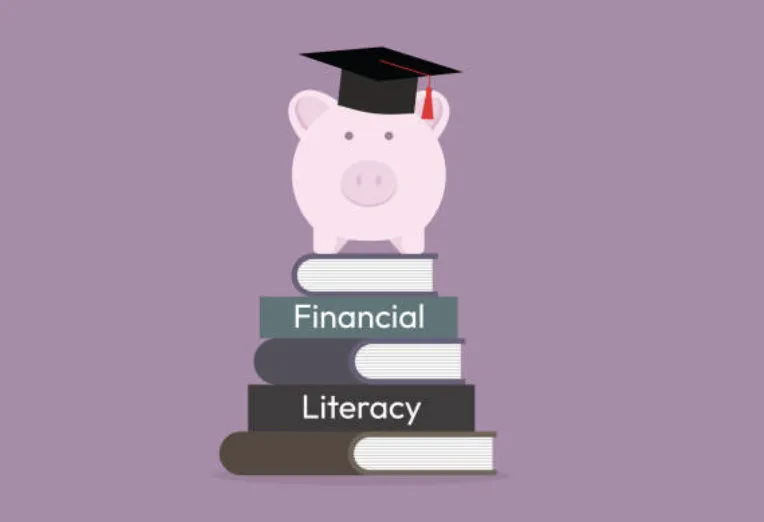
Financial literacy is not optional. It is not an elective, an enrichment unit, or a skill students are expected to “pick up later.” It is a fundamental life skill, one that determines whether a young adult builds stability or struggles under preventable financial stress. If graduation is meant to signal readiness for the real world, then financial literacy must be a requirement, not an afterthought.
The day after graduation, the lessons change fast. Whether students head to college, trade school, the military, or straight into the workforce, they are immediately confronted with financial decisions that carry legal and long-term consequences.
For many, the first is student loans and financial aid. Teenagers are asked to compare loan types, interest rates, repayment plans, and deferment options, often with little guidance. They may not realize how interest capitalizes, how long repayment can last, or how a single borrowing decision can shape where they live, what jobs they take, and whether they can afford future milestones like buying a home or starting a family.
Credit cards often follow close behind. Marketed as tools for emergencies or independence, they are easy to obtain and even easier to misuse. Few young adults understand how credit scores are calculated, how missed payments linger for years, or how high-interest balances quietly balloon. A single mistake at 18 can make borrowing more expensive well into adulthood.
Then there is the cost of simply living. Rent, utilities, car insurance, health insurance, taxes, and payroll deductions arrive with little warning or no syllabus. Paychecks look larger on paper than they do after withholdings. Monthly expenses stack up quickly, and budgeting becomes less theoretical and more urgent. These aren’t hypothetical scenarios; they are immediate realities, often faced before a student’s 19th birthday.
Yet while schools require advanced math, standardized testing, and a long list of academic benchmarks, many graduates leave without ever learning how to read a loan agreement, file basic taxes, or balance a budget. The result is a stark mismatch between what schools measure and what life demands. We assess students’ readiness with exams and transcripts, but the real test begins the moment they start signing on the dotted line, unprepared for consequences that are anything but academic.
Despite the stakes, financial literacy education in the United States remains fragmented and uneven. Where a student lives often determines whether they ever receive formal instruction in how money works. Some states have taken steps in the right direction. According to the National Endowment for Financial Education (NEFE), 30 states now include some form of financial literacy as a graduation requirement. That still leaves millions of students in states where personal finance is optional, inconsistent, or absent altogether.
Even within states, access is far from equal. Research for the Center for Financial Literacy shows that schools in predominantly wealthy and white districts are more than twice as likely to require a financial literacy course as schools in predominantly poor or minority communities—about 11.4% compared to just 4.6%. In other words, the students most likely to have financial support and guidance at home are also the most likely to receive it in school, while those who need it most are left without it.
In many districts, financial literacy is offered only as an elective. Electives compete with graduation requirements, test prep courses, and scheduling constraints. Students juggling work, family responsibilities, or academic recovery rarely have the luxury of choosing an “extra” course, especially one they may not realize is critical until it’s too late. Optional instruction assumes students already understand its value, or that someone at home will fill the gaps. For many families, that assumption simply isn’t realistic.
The consequences of these gaps are measurable and persistent. According to Motley Fool, adults earning less than $25,000 a year answer only about 25% of financial literacy questions correctly, compared to roughly 58% among those earning more than $100,000. Education level compounds the problem: individuals with only a high school diploma average 35% correct, while those with a college degree score closer to 63%. These disparities reflect unequal access to knowledge early on.
For students from higher-income families, financial education often begins long before graduation. They overhear conversations about mortgages and retirement accounts, learn how credit works by watching their parents manage it, and receive guidance when it’s time to fill out financial aid forms or open a bank account. By the time these students sign their first loan or lease, the language is familiar, and the risks are clearer.
That experience is far from universal. First-generation students and students from low-income households are more likely to navigate financial decisions without that built-in safety net. When parents are juggling multiple jobs, living paycheck to paycheck, or were never taught these skills themselves, there is little opportunity for informal financial education at home. In those cases, school isn’t just a supplement; it’s the primary, and sometimes only, place students can learn how money works.
Research underscores this reality. About 75% of teens rely on their families for financial education, while only 52% report learning personal finance at school. When financial literacy depends largely on family knowledge, advantages accumulate for some, while others must navigate risky financial terrain alone.
That’s why financial literacy must be understood as a fundamental skill, not a lifestyle elective. Teaching students how to budget, understand credit, evaluate loans, and plan for taxes isn’t about encouraging wealth or any particular career path. It’s about equipping young adults to make informed decisions, manage risk, and participate fully as productive members of society. A high school diploma should represent a shared baseline of preparation for real-world responsibilities.
Critics of financial literacy often raise common concerns. The first is time—schools already have a lot on their plates. Yet financial literacy does not require creating an entirely new course or displacing core academics. Personal finance concepts can be integrated into existing math classes through real-world applications like budgeting, interest calculations, and loan repayment. Civics courses can cover taxes, public spending, and the economic responsibilities of citizenship. Life skills or economics classes can incorporate credit, insurance, and consumer protections. Teaching students how money works strengthens education by making learning relevant and applicable.
Another argument is that parents should be responsible. In an ideal world, perhaps. In reality, not all parents have the financial knowledge, confidence, or time to do so. Many adults are still navigating debt, credit challenges, or financial instability themselves. Others work long hours or multiple jobs, leaving little room for structured instruction at home. Expecting families to shoulder this responsibility alone ignores the disparities that already exist and ensures they continue.
Some say students simply aren’t interested. Disinterest often reflects how material is taught, not whether it matters. Students may tune out abstract lessons, but they pay attention when the content connects directly to their lives. When financial literacy is practical, interactive, and rooted in real-world decisions students are already making, engagement rises. Teenagers are keenly aware of the impact money has on their independence—they just need guidance that meets them where they are.
Ultimately, financial literacy isn’t an extra; it’s a necessity. When taught thoughtfully, it fits naturally into the education system while equipping students with knowledge they will use every day. Instruction should focus on the financial decisions students are most likely to face after graduation, not abstract theories they may never use.
At its core, financial literacy education should teach budgeting and saving in concrete terms: tracking income and expenses, planning for irregular costs, building emergency savings, and understanding the difference between wants and needs. Understanding credit and debt is equally essential: how credit scores work, how interest accumulates, and how different types of debt affect long-term financial health. Students should also learn to recognize predatory lending practices and avoid common financial traps.
Taxes and paychecks should no longer be a mystery. Graduates should know how to read a pay stub, understand deductions, file basic taxes, and anticipate how withholding affects take-home pay. A strong course should also cover student loans and postsecondary options, helping students compare financial aid offers, understand loan terms, evaluate return on investment, and weigh alternatives like community college, apprenticeships, or trade programs.
Modern financial education must include consumer awareness and digital finance. Online banking, mobile payment apps, buy-now-pay-later services, and digital subscriptions are part of everyday life. Students should learn how to protect their personal information, spot scams, manage digital spending, and understand how technology can both help and harm financial well-being.
Scenario-based learning—analyzing a sample lease, creating a mock monthly budget, comparing loan offers, or filing a practice tax return—turns concepts into usable skills. When students see themselves in the scenarios, financial literacy stops being theoretical and starts becoming personal. That is how education prepares students not just to graduate, but to thrive.
Graduates with financial literacy are less likely to fall into predatory debt, more likely to understand the true cost of borrowing, and better equipped to spot high-interest traps disguised as quick solutions. Knowledge shapes better career and education decisions: graduates can weigh job offers carefully, evaluate further schooling, and avoid debt that limits their flexibility.
Communities benefit, too. Financially informed adults are better able to pay rent, support local businesses, and weather economic disruptions. Households with fewer financial crises reduce pressure on public safety nets. A financially literate population supports a more informed and resilient workforce, better positioned to adapt to economic change.
Teaching financial literacy isn’t just about avoiding mistakes; it’s about building capacity. When graduates are equipped to manage money wisely, everyone benefits—from families and employers to communities and the broader economy.
The path forward is clear. Policymakers, school boards, and education leaders must treat financial literacy with the same seriousness as other graduation requirements. Preparing students for adulthood means more than test scores and transcripts; it means ensuring they can navigate the financial system that will shape nearly every aspect of their lives. Parents and community members also have a role to play: school board meetings, curriculum reviews, and conversations with elected officials can help make financial literacy a requirement.
Graduation should mark readiness for the real world, not the beginning of avoidable financial mistakes. If we expect students to manage their own futures, we must first teach them how to manage their money.